Showing posts with label questions. Show all posts

Wednesday, December 3, 2014

creative: one in seven


This is a poem I wrote during our US-2 midterms back in September 2014, which was a time for the missionaries in my class to come together in NYC for a time of reunion, reflection, and equipping. During one session, we were asked to write a short poem or prose about Sabbath, and this was my response. I pray we could all find a little more time for Sabbath in each day and each week.

One in Seven

Six days of the week are planned, scheduled, outlined, and detailed. The alarm rocks me to consciousness at 7:00am. These days are crammed with meetings, works, chores, duties, things to be excited about and things to deplore. It’s a race – can I get everything done that I said I would do before it’s time for lights out, tap out, conk out?

One day,
just one,
in seven is left,
set apart,
unstructured.
I finally get to sleep in!
With nothing but a blank slate ahead of me,
I get to decide with God what we will do together today.
My biggest responsibility is to make sure I get the rest and rejuvenation I need.

But that’s a huge responsibility in itself. It becomes a burden to set aside that time. I permit commitments and responsibilities to slowly leak in, crowding out the Sabbath, breaking the plan for having no plans.

But why do I allow this day called holy to become much like the other six?

<><><>

If you refrain from trampling the sabbath,
   from pursuing your own interests on my holy day;
if you call the sabbath a delight
   and the holy day of the Lord honorable;
if you honor it, not going your own ways,
   serving your own interests, or pursuing your own affairs;
then you shall take delight in the Lord,
   and I will make you ride upon the heights of the earth;
I will feed you with the heritage of your ancestor Jacob,
   for the mouth of the Lord has spoken.
Isaiah 58:13-14

Wednesday, July 23, 2014

year 2, day 1


One year ago today, I was a wide-eyed, hopeful candidate for mission service on my way to New York City to begin training to become a young adult missionary. I was walking away from six years of grad school. I had two engineering journal papers sitting on desks of editors, waiting to be approved. I still had a year left on my lease at my apartment and was hoping and praying for a subletter. I just had last meetings for ice cream, drinks, bike rides, and dinner with some of my greatest friends. I met brand new people and made connections. I had lots of conversations about wrapping things up, handing things off, and staying in touch.

I had never experienced such a feeling of living in the moment. There was no planning. All the plans had been made, and then was the time to execute. I had to fully trust in the Spirit to stay afloat.

I had no idea what I would encounter in the next three weeks during training. My brothers and sisters in mission, along with their hopes, dreams, experiences, and callings. The issues of justice, those hard and heavy topics that I never learned about in school. The leaders, going to bed later and getting up earlier than any of us to guide us through our transition. The city. The bagels with schmear. The farm. The fleas. The beets and kale. The complaining. The unity. The worship.

And then we were commissioned, sent as missionaries far and wide as agents of transformation who would be transformed in the process.

Things fell into place. I was able to sublease my apartment. I cleaned out and gave away lots of stuff. I packed up and moved home briefly. I finally found an apartment in DC, and I moved in a week later. I got down to business.

During my first several months, I felt myself grow a lot in many ways. I had a lot of responsibility due to some transitions in the director of my placement, which I loved. I learned more and more about all of the hidden craziness (both good and bad) going on in our world, and came to greater understanding of my own privilege and ways that others are privileged over me (the latter, admittedly, are fewer). Finding ways to keep in touch with people in far away places became even more of a priority for me. I started playing Frisbee on the National Mall.

It’s been a wild and amazing ride.

That brings me to today, the halfway point. I have 364 more days to live this life before my term is officially completed. Recently, I feel like I’ve plateaued in a lot of ways. I’ve now heard all of our regular speakers for the Seminar Program, though we are recruiting more. I’ve settled into the day-to-day planning and follow-up activities of our work. I’m not feeling as challenged as I was before. I’m hoping to come up with some new ways to stretch and grow, and I know listening to God is going to be key to that.

I’m also looking to the future. The biggest question still remains: what is God calling me to? Engineering? Ministry? Education? Seminary? Something else?

I don't have a nice bow to put on the end of this post, so I'll leave it here.

Prayer Requests:
  • As I begin my second and final year of mission service, that God would speak to me, and that I would have ears to listen to God and all the things that God has placed in me.
  • For my brothers and sisters in mission, that those who have been in transition would find peace and that we all would be renewed, ready to finish the race.
  • For my family, who are dealing with health problems.

Saturday, June 28, 2014

my most important question: what am i doing here?

On June 22, I got the honor of sharing part of my call story and a question that I've wrestled with at The District Church. Every year, TDC has a sermon series called My Most Important Question where people from the congregation are invited to share a question that they have dealt with or continue to deal with. I love the spirit of this series - it gives people an opportunity to tell their stories, celebrating the fact that the faith journey is not an easy journey and that our questions, our messy experiences, and our intimate encounters with God and people are critical to that journey.

In the audio below, Pastor Justin gives an intro to the series, and then three of us share our stories in sequence. I'm the second speaker, between my friends Laurie and Bethany. My part starts around 17 min 45 sec and lasts about 10 minutes, but you're welcome to listen to the other two, who also had great things to say!

Laurie spoke about her struggle of seeking approval, especially from her mother, but not finding it. She asks, "Do they not notice me?" My talk hinges around my moment of consciousness, when I realized that getting my Ph.D. in engineering wasn't where I was called to be. In that moment, I asked "What am I doing here?" Bethany describes her tough years with a bad marriage and divorce, along with the additional fear of the stigma the church may put on divorced people, as she asks, "Where is joy in my trials?"

Take a listen, and I hope you are blessed!


Wednesday, April 9, 2014

a brief sketch of my journey so far

This article will appear at a later date in the General Board of Church and Society's Faith in Action Newsletter as part of a series of staff profiles. About a year ago was when I firmly decided it was time for a change in my situation, and now seems like an opportune time to revisit this here.

Update: a version of this article has been published in Faith in Action on July 11, 2014.


Photo credit: Wayne Rhodes


“You’re doing ok, but you still have a ways to go. I don’t see a light at the end of the tunnel yet.” This was not what I wanted to hear from my academic advisor as I neared the end of my sixth year in grad school. A Ph.D. student in mechanical engineering at the time, I was growing weary of research and academia, and I longed for something more purposeful. Also growing at the time was my Christian faith, and throughout grad school, I struggled to connect faith, my aptitude for science and math, and an awareness of the brokenness in the world. While my advisor's comments really cut to the heart, it was his honest assessment of my progress and it was a talk that was long overdue. That conversation lead me to begin an earnest search for something new.


Through a series of connections, I landed on the US-2 Young Adult Missions Program of the UMC (now known as the Generation Transformation Global Mission Fellows Program). After an extremely thorough application and a couple interviews by online video chat, I was accepted into the program, trained, commissioned, and finally placed at the General Board of Church and Society with the UM Seminar Program.

It’s hard for me to imagine a more perfect placement. Since I spent ten years studying engineering, I only had some cursory exposure to social issues. Here, I am surrounded by experts in a variety of areas. Through the Seminar Program, we invite these and many other authorities to share their work with our groups, and I get to learn right alongside them. Teaching and tutoring have been longtime interests of mine, but haven’t felt the pull to formally study education. Being on staff at the UM Seminar Program gives me opportunities to hone my skills in facilitation, education, and curriculum design. Most importantly, this place gives me room to listen for and discern my calling with the support and guidance of a wonderful and wise staff.

Working with my Seminar Program groups is inspiring. Some of my seminar groups are full of knowledge. My first group, a youth group Morrow Memorial UMC in New Jersey, could name all eight Millennium Development Goals while most people have never even heard of them.  Some groups come with a wealth of experience. Groups of Habitat for Humanity AmeriCorps Volunteers brought frontline accounts of affordable housing and neighborhood revitalization. All groups, at least so far in my brief tenure here, have come with cups, ready to be filled with more knowledge and more experience, and be sent into the world. They are so much more than just vessels to be filled, though. These groups also come with a sense of adventure, ready to be challenged both intellectually and emotionally, truly engaging in topics that many have the choice and privilege to ignore.

The work challenges me to understand the current state of the world and how we move to the way God intends for us to live. How do we balance personal choice and free agency with social responsibility and the common good? How can providing immediate aid (mercy) and addressing root causes of societal problems (justice) work synergistically instead of one or the other having preference? What is the government’s role in these? What is the church’s role in these? What is my role in these? Many tough questions, no easy answers. Fortunately, I’ve always enjoyed a challenge.

After years of feeling vocationally disjointed, I’m now gifted to be abiding in a place of growth, purpose, and challenge. Where will God lead me next? Many people ask me if I will return to school and finish my Ph.D. At the moment, I don’t feel called to do so. I have a few other ideas, but I also have time to discern and decide.

Wednesday, March 26, 2014

how do you experience God's call? part 2

Jesus went out again beside the lake; the whole crowd gathered around him, and he taught them. As he was walking along, he saw Levi son of Alphaeus sitting at the tax booth, and he said to him, ‘Follow me.’ And he got up and followed him.
 

And as he sat at dinner in Levi’s house, many tax-collectors and sinners were also sitting with Jesus and his disciples—for there were many who followed him. When the scribes of the Pharisees saw that he was eating with sinners and tax-collectors, they said to his disciples, ‘Why does he eat with tax-collectors and sinners?’ When Jesus heard this, he said to them, ‘Those who are well have no need of a physician, but those who are sick; I have come to call not the righteous but sinners.’

Mark 2:13-17

I'm working my way through the book of Mark in my personal devotion time. This passage describes Jesus' call of Matthew (known as Levi here). I think the part that really hit me was the last verse, where Jesus says "I have come to call not the righteous, but sinners." This NRSV translation is probably more accurate, but I really like the nuance added by the NLT: " I have come to call not those who think they are righteous, but those who know they are sinners."

We're going to do another exercise together. Should you grab a writing implement and a scrap of paper? Oh yes!

When I think about calling, I often like to rest in the areas where I think or feel I'm most excellent. What do I do great? What gifts has God given me? What are my greatest successes in life? I actually want to invite you to rest there for just a moment. Take about 2 minutes and write down some of your life's greatest successes.

When you finish, circle the 2-3 that you perceive are the most significant. Right now, in this moment, how do you hear God speaking to you through these? Go ahead and jot down some notes if you are moved.

<><><>

My supervisor and I are reading through a book together called Let Your Life Speak by Parker Palmer. My summary of chapter 1 is this: God designed every part of us, including our souls - our true selves. We have gifts, passions, abilities, and proclivities which God has planted in us. Some of these have also come from our life experiences. We can let our lives speak - listen to the soul God has designed within us and which has some experience in the world - in many ways. Some of those ways might have come out in part 1 of this devotion, and might include "our actions and reactions, our intuitions and instincts, our feelings and bodily states of being," according to Palmer.

In the first part of today's devotion, we listed all of the positive things. What about the flip side though? Palmer writes,
But if I am to let my life speak things I want to hear, things I would gladly tell others, I must also let it speak things I do not want to hear and would never tell anyone else! My life is not only about my strengths and virtues, it is also about my liabilities and my limits, my trespasses and my shadow. An inevitable though often ignored dimension of the quest for "wholeness" is that we must embrace what we dislike or find shameful about ourselves as well as what we are confident and proud of.
Ok, back to the pen and paper. Write down some of the things you consider your life's biggest failures, those trespasses and shadows. Don't worry how they tie in, just write for about 2 minutes.

Again, when you finish, circle the 2-3 most epic fails of the list. What is God revealing to you in this moment through these? How will you glorify God in spite of these? What new clues about your calling have you recognized?

These could also be painful. How might you work toward healing and restoration from these? Where do you need God's supernatural power to bring healing and restoration?

Our friend Levi/Matthew probably ripped off a lot of people as a tax collector. They were some of the most despised people in Jesus' day, being grouped in with the sinners and the outcast. I bet Matthew was tired of being isolated, and he probably got tired of taking advantage of people. I imagine him as someone who came to work day after day, sitting in his little tax booth, just looking and waiting and wishing for something new and different. Then in stepped Jesus with a simple call.

Our failures might not tell us what we should do, but they do help prune the list of options, informing us what is definitely not our call and what are the things we should walk away from. As for Matthew, he had a taste of the worldly life as a tax collector, and apparently that didn't suit him. All he needed was a simple call, an invitation, from a homeless man to see that there was something better for him!

So rest in your successes, but don't toss out your failures. They have a place in God's Kingdom too.

Wednesday, March 19, 2014

how do you experience God's call? part 1

A few of my brothers and sisters in mission have decided as part of Lent to write and share devotionals with one another. I thought I would share mine with the rest of the world too. I shared this exercise on a retreat with my Wesley Foundation Campus Ministry at Michigan a few years ago, and I though it would be worth sharing again, as I've thought about it recently.

Take out a piece of paper. Go on, I promise you won't have to share your feelings with anyone if you don't want to. Fold the paper in half, whichever way is natural for you. Take about 3 minutes and make a list or word cloud on one half of the paper to answer this question: in what ways do you communicate with God?

Don't read on until you've done this!

Got it? Good!

Now take another 3 minutes to write on the other half of the paper the answer to this question: in what ways does God communicate with you?

Finished? Go ahead and read on.

What do you notice about the two halves? After reading and responding to the two questions, how do you perceive them to be distinct?

I'll share two of my thoughts. I have the privilege of knowing both questions a priori, but my first list of ways I communicate with God looks kind of bland. It mostly says "prayer" and I've listed different modes. I also listed worship in song and instrument, and also writing. My list second list of ways God communicates with me is much richer. Nature, friends, urges, discomfort, brokenness, scripture, food, and many more. 1 Thessalonians 5 commends us to pray without ceasing, and I might expand that to say: be in communication with God at all times. Take in those moments of natural beauty and thank God. Sit in the brokenness and search for direction. Cherish that Godly advice from a trusted friend, and know that all of these are gifts from the Giver.

Secondly, I find my prayer life can be focused more on the "how do I communicate with God" part and less on the "how does God communicate with me" part. True communication is a two-way street. How is it with your soul? Given the ways that God communicates with you, what can you do today to change your lifestyle, habits, or environment to listen to the voice of God more clearly? I have to ask myself these questions as well.

One of my favorite Psalms is Psalm 19:1-4a (NRSV). To wrap up, read the words slowly, and let them flow in and around you as you read.

The heavens are telling the glory of God;
   and the firmament proclaims his handiwork.
Day to day pours forth speech,
   and night to night declares knowledge.
There is no speech, nor are there words;
   their voice is not heard;
yet their voice goes out through all the earth,
   and their words to the end of the world.

Go into your day knowing we follow a God who calls us by name, if only we would listen.

Thursday, March 6, 2014

diversity stories

This week began what my supervisor and I have dubbed “March Madness” where we have quite the flux of spring breakers knocking at the door of the Methodist Building. We use this term in the most loving way possible – I absolutely love having the excitement of people and energy in and out of the Building, eager and ready to change the world. It sure does keep us on our toes though. The latest winter storm "buried" DC under about 3 inches of snow, closing the Federal Government and most of the city on Monday, and making it difficult for our presenters and resource people to join us. But whether sleet, or hail, or stormy gale, the Seminar Program goes on!

This week was a treat for me. My crew (or at least twelve of them) from the Wesley Foundation at the University of Michigan (which, incidentally, is the oldest campus ministry in the Americas no matter what UIUC Wesley says) has been here for a seminar. I have very much enjoyed catching up on stories and hugs, and also learning right along-side my group!


The topic was race relations and affirmative action. This topic came up for the group because in Michigan, voters passed a referendum which said it is illegal to use race as a criteria for college admission, among other things. Since then, there has been a decline in enrollment notably among African American students and other racial minorities at University of Michigan. This has created a lot of racial tension on campus.

In addition to informational and interactive seminar sessions, we also had the chance to listen to historian Harold Bell at Ben’s Chili Bowl and share in Ash Wednesday service with the Wesley Foundation at Howard University. All of these experiences gave us ample opportunity to dialog about race and affirmative action.

I think I could write quite a bit about this topic, but I just want to lift up a reflection from my own experience. One distinct memory I have from college was trying to get my first internship. I talked to recruiter after recruiter at career fair, just hoping to get an interview. I didn’t expect that I would have to beg my way into an interview with my nearly 4.0 GPA, but that’s what I did. I really wanted to get in with one of the Big Three auto makers, but I ended up with an internship with a relatively small engineering firm that most people (including myself) had never heard of. Thankfully, I ended up with something, and it turned out to be a great experience! After career fair, I talked with one of my female engineering friends about how things went. She had her choice of offers from Ford, GM, and many others. I was pretty steamed about this, thinking she probably got her pick of awesome internships because of affirmative action.

I think that frustration is real for people, and I don’t think it is wrong. In fact, I think it’s good to acknowledge it, name it, and talk about it. I’ve learned that you can’t really help how you feel, only how you react. It is good to reflect (whether alone, with others, or in prayer) on feelings and understand them. Well, at least for a thinker like myself, this is helpful. Feelings don’t do much for me unless I can understand why I feel a certain way.

As I think back on this, I can make a couple conclusions. First, I can’t say for certain if affirmative action is why she had so many offers. She could have been more involved on campus than me (very likely), less socially awkward than me (very likely), and better at selling herself than me (very likely). Second, diversity is valuable, and I have a better understanding of that now. Long story short, increased diversity allows us collectively to problem solve from increasingly diverse angles and perspectives. Why is this important? Attacking problems from one direction may work, but there may be better approaches which are not obvious to people of one particular culture. If I’m running around the world moving everyone’s dining table into their bedrooms, I could miss out on a better solution. I could also miss the opportunity to collaborate to find an even better solution than either group could reach in isolation.

I thought Rev. Mulenga, who spoke to my group today and is the father of one member of the group, had a great spiritual insight. Humans are an image or reflection of the Invisible God. One human or one people group cannot capture that image fully, so God gave us diversity to help express that better. One is not more valuable than another, but all help to reflect God’s glory in different ways.

How are we reflecting that glory? Let me leave you with this “living-in-the-tension” kind of question as I also ponder it.

Wednesday, February 19, 2014

sabbath post: the wind-blown Spirit

So here I am, bedtime on a Wednesday night, just sitting down to my blog. I actually have a pile of ideas I'd like to expand on, but I'm trying to renew my commitment to getting appropriate rest. I just didn't have time for a thorough blog post this week, so I'm starting a new tradition of Sabbath posts so I can keep my commitment of Wednesday posts and also make sure I get enough sleep.

One of my favorite scriptures is John 3:8.

The wind blows where it chooses, and you hear the sound of it, but you do not know where it comes from or where it goes. So it is with everyone who is born of the Spirit.

I like things to be linear, structured, and organized. This verse is not comforting to me. How can I figure out life when it just blows all over the place? And Jesus is telling me that's how it goes with people born of the Spirit?

I first started to actually enjoy this scripture when I started seriously considering God's calling on my life. It's not straightforward, there is no system or ten-step process to follow. We get the Spirit to follow, and the Spirit blows like the wind!

How does this verse inform your calling? Also, how are you getting some Sabbath rest lately?

Thursday, February 13, 2014

what can a toy tell me about masculinity?

One of my first experiences of the new year was attending a Healthy Masculinity Training Institute by an organization called Men Can Stop Rape. To quote their mission statement, they want “To mobilize men to use their strength for creating cultures free from violence, especially men's violence against women.” Part of that training consisted of thinking more deeply about masculinity and what it means to be a man.

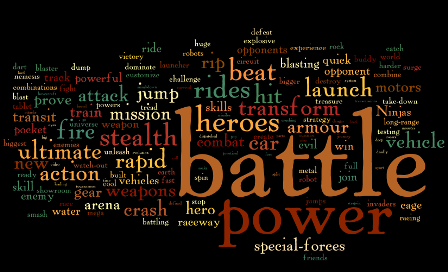
Toward the beginning, we had a discussion around two “word clouds,” which are below. They were formed by recording the words in toy commercials, tallying the number of times certain words were said, and adjusting the size of the word based on the tally. So, the larger the word, the more times, relatively, it showed up in commercials. You can read more about it here if you like.

Take a minute and look at each one before reading on. What do you observe?

http://www.wordle.net/show/wrdl/3372921/Words_Used_to_Advertise_Boys%27_Toys

http://www.wordle.net/show/wrdl/3372936/Words_Used_in_Advertising_for_Girls%27_Toys

I’ve had a few good conversations and email exchanges over these two very interesting images. As a man, the violence of the boy’s word cloud is what immediately caught my eye. Boys learn all about battle, power, weapons, and similar things from a young age. While I get a certain sense of nostalgia upon reading these words, thinking back on Ninja Turtles, Nerf guns, and the like, I have to also think more about the violence I was exposed to when I was young, and how much it guided or informed my view of the world. These words could be harmful if a boy finds his identity or worth in them.

On the other hand, typical girls’ toys are described by "softer" words. To me, a lot of these divide up into two categories. One category is of words focused on appearance – pretty, hair, nails, style, etc. These may be harmful if a girl finds her identity and worth in them. The second category is of words which I would call valuable, like love, fun, and friendship. To me, these are some of the things that life is all about.  When mixed in with the first group of words, though, they could become problematic, implying that things like love and friendship are on par with, or worse, come from things like pretty and style. In this sense, I can see how some people would come to the conclusion that all of these words promote a softness, weakness, or passivity.

Additionally, it's interesting to note that that words like these are pretty much absent from the boys’ word cloud. To be fair, I do see words like buddy, friends, and skill, but they are overwhelmed by other words.

Just a quick caveat before we continue: I’m not saying toy advertising defines masculinity or femininity, nor does it completely determine how kids turn out, but to me, the images reflect a certain truth about the cultural environment we all grow up in as Americans.

To see marketing presented this way is a bit startling. Do we value violence as a people? Do we value weakness or passivity? I don’t think anyone would say they truly value these things.

I think they are marketed this way because of a certain status quo. “Boys like battles because they have always liked battles; girls like tea parties because they have always liked tea parties. Why change?” Changing takes energy, introspection, and conversation, and if people can't see a good reason to invest the time and energy, they won't do it. I don't think there is some conspiracy of men who consciously decides training boys to be violent and girls to be passive is a good idea. I think it’s more of a neglect to see that we could do things a different and better way.

I’m also not coming from the place where I think all aspects of gender should be up-ended. Just the harmful parts. Changing a few things could yield profound results, like men who use their strengths and gifts for creation and healing rather than violence and destruction, and, likewise, women who realize and use their strengths and gifts to make the world a better place.

In short, my hope is that we create environments where we can discover and live into the call of God rather than the call of society.

Wednesday, January 22, 2014

fatal error

Before the title gets anyone too worked up, let me say, no one died that I know! Just my computer. Last night, my computer let me know:

McAfee Endpoint Encryption
Fatal Error: [0xEE020006] Getting disk info

Good times, great oldies. So, in lieu of the prose I had planned on posting, which is safe and sound on my computer's hard drive, you get this one that I'm making up on the spot. Oftentimes it's good to leave the Spirit some room to work.

I could spin this a million cliche ways - look how much we (I) rely on technology, take life's speed bumps in stride, this could be a God-given gift of patience testing, I shouldn't complain because there were people who slept outside in the single-digit cold last night, etc. I think those have all been written.

Well, this could be cliche too, but I'm going to go with it. I'm really hoping this is just a software problem, because if so, I should be able to recover my files and start fresh. My computer was starting to feel bogged down and sluggish, burdened and distracted by many things. This fatal error, this death, could be an opportunity to start fresh and new. The old life has died, and a new life, washed clean, can replace it. I think that's the opportunity Christ offers us.

What old life, old ways, old states-of-being is God calling us out of, and how will we respond? Will we respond immediately as the disciples did in Matthew 4?

Let's listen closely for God's call today.


Wednesday, December 25, 2013

silly questions

Jesus answered them, “Very truly, I tell you, you are looking for me, not because you saw signs, but because you ate your fill of the loaves.”
John 6:26

Merry Christmas!

This post is going to be like time travel – written on the bus on Saturday, posted on Wednesday. On Saturday morning, I awoke at the early (late?) hour of 4:45am to begin my trek home for Christmas vacation. Traveling by bus is one way I’ve given in to simple living. It’s a release of control compared with having a car – I don’t get much choice as to when I leave, who I ride with, how much stuff I bring, or what temperature the cabin is. Door to door, it’s about 11 hours of travel instead of 6 by car. DC bus to Union Station (oops, bus didn’t come, I had to walk); Megabus to Philadelphia; 2 hour layover; Megabus to State College via Harrisburg; car ride to Brockport.

On the other hand, it is very freeing. There is a lot of time for reflection, reading, and even writing a blog post. While in Philadelphia’s 30th Street Station (pictured) waiting to change buses, I got the opportunity to hang out and chat with a panhandler (not homeless – he had an apartment) for 20 minutes or so. That’s the first time I’ve ever had someone ask me for money and then walk away because they had other things to do!

30th Street Train Station, Philadelphia, PA

I read the above scripture during one of my times of waiting. It grabbed me. Earlier in John 6, John records Jesus’ feeding of the 5,000. After everyone had eaten, Jesus slipped away quietly, sensing the desire of the people to “take him by force and make him king.” The next day, the people traced Jesus’ path and caught up with him. “When did you come here?” they wanted to know.

One of the fun things for me about John’s version of the Gospel is that Jesus almost never answers questions directly. I’ve read or heard somewhere that Jesus is so sensitive that he sees through these superficial questions and answers the question that is actually on the hearts of people. Jesus knows that when he came to Capernaum across the sea is not important. The more important question is: why are they are so drawn to Jesus?

I imagine them, and even myself, answering, “Dude, you took five dinner rolls and two cans of tuna and fed 5,000 of us! And we got to take home leftovers!” (Sidenote: I love leftovers)

“Nope. Pretty cool, but actually, you were hungry, and I fed you.” Seeing a miracle is pretty amazing, but having a hole in your soul filled is way better.

Jesus didn’t just give them something to eat to fill their bellies. Manna, the flaky bread-like substance that God provided for the Israelites in the wilderness, is pretty amazing. Jesus – the bread of heaven, God incarnate, walking among us and with us, showing us new ways to live, living and dying to reconcile us to God – is way better. “When did you come here?” now seems like a silly question!

Let’s keep asking God silly questions though. We might not be able to get to the tougher and more important ones on our own.

I hope your Christmas and holiday season has been everything you needed and everything God wanted for you, and that 2013 treated you well. I know it’s been a trip for me. Thank you for your continued support, including reading my blog!

Come, Lord Jesus. Reign in this world; reign in my heart. Merry Christmas!